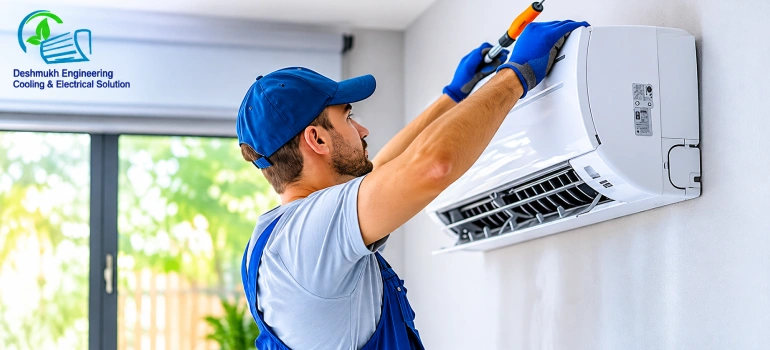
How Can Professional AC Servicing Improve Air Conditioner Performance?
Air conditioners have become an essential part of residential, commercial, and industrial spaces, particularly in cities like Hyderabad, where summer temperatures and humidity can place considerable demands on cooling systems. Whether it is a home, office, hospital, showroom, or manufacturing facility, an efficiently operating air conditioner helps maintain indoor comfort and a productive working environment.
However, continuous AC operation, dust accumulation, clogged filters, refrigerant-related issues, and neglected maintenance can gradually reduce cooling performance. An air conditioner that once cooled a room quickly may begin taking longer to reach the desired temperature, consuming more electricity, or producing unusual noises.
This is where professional air conditioner maintenance becomes important. Regular servicing helps identify potential problems, maintain airflow, improve heat exchange, and support efficient system operation. Choosing a reliable provider for AC Service in Hyderabad can help homeowners and businesses maintain their cooling equipment and reduce the risk of unexpected breakdowns.
Deshmukh Engineering focuses on understanding air conditioning requirements and providing suitable servicing and maintenance support for different cooling environments.
Why Is Professional AC Servicing Important for Better Cooling Performance?
Professional AC servicing involves inspecting, cleaning, testing, and maintaining important air conditioner components to ensure that the equipment operates according to its design requirements.
An air conditioner contains several interconnected components, including filters, evaporator coils, condenser coils, fans, compressors, electrical connections, and refrigerant circuits. When one or more components become dirty, damaged, or inefficient, the overall cooling performance can be affected.
For example, a clogged air filter restricts airflow, while dirty condenser coils can reduce the system's ability to release heat. Similarly, incorrect refrigerant charge or electrical faults may affect cooling performance and equipment reliability.
Professional maintenance helps identify these issues before they develop into more serious problems.
How Does AC Servicing Improve Cooling Efficiency?
Regular maintenance supports efficient cooling through several important activities.
Improved Airflow: Cleaning filters and checking blower components helps maintain proper air circulation throughout the room.
Better Heat Transfer: Cleaning evaporator and condenser coils supports effective heat exchange between the refrigerant and surrounding air.
Refrigerant System Inspection: Checking the refrigerant circuit helps identify possible leakage, abnormal operating pressures, and other performance issues.
Electrical Component Inspection: Checking electrical connections, capacitors, contactors, and control components helps identify potential operating faults.
Drainage Maintenance: By keeping the condensate drainage system clean, water leaks and drainage blockages can be prevented.
Together, these maintenance activities help an air conditioner operate more consistently under normal working conditions.
What Are the Key Features of Professional AC Servicing?
Professional air conditioner servicing involves more than simply washing the filters. A proper maintenance procedure considers the condition of the complete cooling system.
1. Air Filter Cleaning and Replacement
Air filters capture dust and airborne particles before air enters the cooling system. Over time, accumulated dirt restricts airflow and can reduce cooling performance.
Cleaning reusable filters or replacing damaged filters with compatible alternatives helps maintain proper air circulation.
2. Evaporator and Condenser Coil Cleaning
Heat gathered from the interior air by the evaporator is released by the condenser.
Dust, grease, and other contaminants can accumulate on these coils. Appropriate cleaning helps maintain heat transfer efficiency and reduces unnecessary strain on the cooling system.
3. Refrigerant System Inspection
Refrigerant is essential for transferring heat through the air conditioning cycle.
A professional technician can inspect operating conditions, check for leakage, and evaluate refrigerant charge using suitable diagnostic procedures.
Refrigerant should not simply be added whenever cooling becomes weak. The cause of the problem must first be identified.
4. Electrical and Control System Inspection
Electrical components control the operation of the compressor, fans, and other important parts.
Servicing may include inspecting wiring connections, capacitors, contactors, circuit protection, thermostats, and control boards, depending on the AC model.
5. Condensate Drain Cleaning
During cooling operation, moisture collected from indoor air is discharged through the drainage system.
Water leaks, offensive odors, and issues with moisture can all be caused by a clogged drain pipe. Regular inspection helps maintain proper drainage.
What Are the Major Benefits of Regular AC Maintenance?
Investing in preventive air conditioner maintenance can provide several practical advantages for residential and commercial property owners.
Improved Cooling Performance
Clean filters, properly maintained coils, and adequate airflow help the system deliver more consistent cooling.
Better Energy Efficiency
When airflow and heat exchange are restricted, an air conditioner may need to operate for longer periods to achieve the required indoor temperature.
Cleaning and maintaining the system can help reduce avoidable operating inefficiencies. Actual electricity consumption depends on equipment condition, room size, insulation, operating temperature, and usage patterns.
Reduced Risk of Unexpected Breakdowns
Routine inspection can help identify worn components, abnormal electrical conditions, drainage issues, and refrigerant leaks before they cause major interruptions.
Longer Equipment Service Life
Maintaining important components and addressing faults promptly can help reduce unnecessary mechanical and electrical stress.
Better Indoor Air Quality
Clean filters and appropriately maintained indoor components help reduce the circulation of accumulated dust and other particles. However, standard AC servicing does not replace dedicated indoor air purification or ventilation systems.
Reduced Maintenance Expenses
Preventive servicing may help avoid certain costly repairs by identifying developing problems early. It also helps businesses plan maintenance rather than responding only when equipment stops working.
What Technical Specifications Are Checked During AC Servicing?
- Power Supply: Checks the voltage and frequency against the equipment's rated requirements.
- Electrical Current: Measures the operating current and compares it with manufacturer specifications.
- Refrigerant Type: Confirms that the AC uses the refrigerant recommended by the manufacturer.
- Refrigerant Charge: Inspects the refrigerant level using the manufacturer's recommended procedure.
- Airflow: Checks indoor blower performance, air filters, and proper air circulation.
- Coil Condition: Inspects and cleans the evaporator and condenser coils to maintain heat-transfer efficiency.
- Temperature Difference: Measures the difference between indoor return-air and supply-air temperatures.
- Drainage System: Checks condensate water flow, drain pipe condition, and possible blockages.
- Compressor: Evaluates compressor operation, electrical current, and unusual noise or vibration.
- Safety Controls: Inspects the thermostat, temperature sensors, and protective devices to ensure safe operation.
- Inspects and cleans the evaporator and condenser coils to maintain heat-transfer efficiency.
- Temperature Difference: Measures the difference between indoor return-air and supply-air temperatures.
- Drainage System: Checks condensate water flow, drain pipe condition, and possible blockages.
- Compressor: Evaluates compressor operation, electrical current, and unusual noise or vibration.
- Safety Controls: Inspects the thermostat, temperature sensors, and protective devices to ensure safe operation.
Why Is Refrigerant Pressure Important?
Refrigerant pressure is an important diagnostic parameter, but it should not be interpreted in isolation.
Pressure readings depend on refrigerant type, indoor and outdoor temperatures, operating conditions, airflow, and system design.
A trained technician should evaluate pressure alongside other measurements to identify the actual cause of poor cooling.
Common Air Conditioner Problems That Professional Servicing Can Help Identify
Air conditioners may develop different operating problems depending on their age, usage, installation quality, and maintenance history.
1. AC Not Cooling Properly
Weak cooling may result from dirty filters, blocked coils, inadequate airflow, refrigerant leakage, or compressor-related problems.
A proper inspection helps identify the underlying issue rather than relying on temporary solutions.
2. Water Leakage From Indoor Units
Water leakage commonly occurs due to blocked drainage pipes, incorrect drainage slopes, damaged drain trays, or installation-related issues.
Cleaning the drainage system and checking the installation can help resolve the problem.
3. Unusual Noise During Operation
Rattling, buzzing, vibration, or grinding noises may indicate loose components, fan problems, electrical issues, or mechanical wear.
The source of the noise should be identified before replacing any component.
4. AC Consuming More Electricity
Increased electricity consumption can be associated with dirty heat exchangers, incorrect temperature settings, poor insulation, refrigerant problems, or ageing equipment.
Servicing helps identify maintenance-related inefficiencies, although it cannot correct every cause of high energy consumption.
5. Frequent AC Switching On and Off
Frequent cycling may be associated with thermostat problems, electrical faults, airflow restrictions, incorrect equipment sizing, or control-system issues.
To determine the true cause, a thorough diagnostic examination is advised.
AC Servicing Procedures: What Happens During a Professional Maintenance Visit?
A systematic servicing process helps ensure that important air conditioner components are inspected and maintained.
Step 1: Initial Equipment Inspection
The technician checks the AC model, operating condition, cooling complaints, visible damage, and installation arrangement.
Step 2: Filter and Indoor Unit Cleaning
The air filter and accessible indoor unit components are cleaned using suitable methods and materials.
Step 3: Coil and Outdoor Unit Inspection
The evaporator and condenser coils are examined for dirt accumulation, corrosion, and visible damage. Appropriate cleaning methods are selected based on the equipment.
Step 4: Electrical Inspection
Wiring, connections, protective devices, and electrical components are checked for abnormal conditions.
Step 5: Refrigerant and Performance Checks
The technician evaluates system operation using appropriate diagnostic instruments and manufacturer-recommended procedures.
Step 6: Drainage Inspection
The condensate tray and drainage pipe are inspected to ensure that collected moisture can flow properly.
Step 7: Final Performance Testing
The air conditioner is operated and checked for cooling response, airflow, unusual noise, water leakage, and other relevant operating conditions.
Applications: Which Facilities Require Professional AC Servicing?
Hyderabad has a wide range of residential, commercial, healthcare, and industrial establishments that depend on air conditioning for comfortable and controlled indoor environments.
Residential Buildings
Apartments, independent houses, villas, and residential complexes require periodic AC maintenance to support comfortable indoor temperatures.
Commercial Offices
Offices in HITEC City, Madhapur, Gachibowli, and Financial District depend on air conditioning to maintain comfortable working conditions for employees and visitors.
Hospitals and Healthcare Facilities
Healthcare facilities require properly maintained air conditioning equipment to support indoor comfort and the operating requirements of specific spaces. Critical healthcare environments may also require specialised HVAC maintenance and air-quality controls.
Hotels and Restaurants
Hotels, restaurants, banquet halls, and hospitality facilities depend on reliable cooling to maintain comfortable conditions for guests and staff.
Industrial and Manufacturing Facilities
Manufacturing units, workshops, and production facilities may use air conditioning for personnel comfort or equipment-related environmental requirements.
Retail Stores and Showrooms
Shopping complexes, retail outlets, and commercial showrooms require effective cooling to maintain a pleasant shopping environment.
What Material Quality Matters During AC Servicing and Component Replacement?
The quality of cleaning materials, replacement parts, and consumables can influence servicing outcomes.
Professional servicing should use materials and components compatible with the equipment manufacturer's recommendations.
Important considerations include:
- Air Filters: Replacement filters should match the specified dimensions, filtration requirements, and airflow characteristics.
- Cleaning Chemicals: Coil cleaners and other cleaning agents should be suitable for the relevant coil material and manufacturer guidelines.
- Electrical Components: Capacitors, contactors, relays, wiring, and protective devices should have appropriate electrical ratings.
- Refrigerant: Only the refrigerant specified for the AC model should be used.Equipment harm might result from mixing refrigerants or utilizing inappropriate substitutes.
- Drainage Components: Drain pipes, insulation, and fittings should be compatible with the installation requirements.
- Insulation Materials: Suitable thermal insulation helps reduce unwanted heat gain and condensation on refrigerant piping.
- Using compatible materials and following correct installation procedures helps maintain equipment reliability.
How Often Should You Schedule AC Servicing in Hyderabad?
The ideal servicing frequency depends on the equipment type, operating hours, surrounding environment, and manufacturer's maintenance recommendations.
In Hyderabad, air conditioners may operate for extended periods during summer. Dust accumulation, construction activity, and outdoor environmental conditions can also influence maintenance requirements.
As a general maintenance guide :
- Residential AC Units: Arrange professional preventive servicing at least once or twice a year, depending on usage and manufacturer recommendations.
- Office AC Systems: Consider maintenance at regular intervals based on operating hours and occupancy.
- Commercial AC Units: Schedule inspections according to equipment usage and environmental conditions.
- Industrial Cooling Systems: Follow a planned preventive maintenance schedule based on equipment criticality and operating requirements.
Air filters may require cleaning more frequently than the complete system, particularly in dusty environments.
Why Choose Deshmukh Engineering for AC Servicing?
Choosing the right air conditioning service provider is important for maintaining equipment performance and avoiding unnecessary repairs.
Deshmukh Engineering focuses on professional engineering and maintenance requirements, with attention to the condition and operating needs of air conditioning equipment.
Technical Knowledge and Equipment Understanding
Understanding different air conditioning systems helps identify possible performance problems and determine appropriate maintenance procedures.
Professional Servicing Approach
A systematic inspection and servicing process helps evaluate filters, coils, electrical components, drainage arrangements, and overall equipment operation.
Quality Materials and Compatible Components
Using suitable cleaning materials and manufacturer-compatible replacement components supports reliable maintenance.
Suitable Maintenance Solutions
Different AC systems have different maintenance requirements. Residential split ACs, commercial units, and larger cooling systems should be evaluated according to their design and usage.
Customer-Focused Service Support
Understanding customer complaints, explaining identified issues, and recommending suitable maintenance actions are important parts of responsible servicing.
If you are looking for dependable AC Service in Hyderabad, contact Deshmukh Engineering to discuss your air conditioning maintenance requirements and identify a suitable servicing approach.
Frequently Asked Questions About AC Service in Hyderabad
1. How Does Professional AC Servicing Improve Cooling?
Professional servicing helps maintain clean filters, proper airflow, effective coil heat transfer, and correct system operation. It also helps identify refrigerant, electrical, and drainage-related problems.
2. How Much Does AC Servicing Cost in Hyderabad?
AC servicing costs depend on the AC type, cooling capacity, service requirements, accessibility, and whether replacement parts or repairs are needed. A site or equipment assessment helps determine the actual cost.
3. Does AC Servicing Reduce Electricity Consumption?
Regular maintenance can help reduce avoidable energy losses caused by dirty filters, restricted airflow, and poor heat transfer. However, electricity consumption also depends on equipment efficiency, usage, and building conditions.
4. Is Gas Filling Required During Every AC Service?
No. Refrigerant is not consumed during normal operation in a properly sealed system. Gas filling is generally required only when the refrigerant charge is insufficient, and any leakage should be identified and repaired.
5. What Is Included in a Complete AC Service?
A typical service may include filter cleaning, indoor and outdoor unit inspection, coil cleaning, drainage checks, electrical inspection, and operating performance testing. The exact scope depends on the service package and equipment condition.
6. Can Regular AC Servicing Prevent Water Leakage?
Regular maintenance helps identify blocked drain pipes, drainage tray issues, and other conditions that may cause water leakage. However, installation defects and damaged components may require separate repairs.
7. When Should I Book AC Servicing in Hyderabad?
Scheduling maintenance before periods of heavy summer usage is a practical approach. Additional servicing may be necessary when cooling performance decreases, airflow becomes weak, or unusual noises and leakage occur.
8. Which AC Components Need Regular Inspection?
Important components include air filters, evaporator coils, condenser coils, fans, electrical connections, capacitors, thermostats, refrigerant circuits, and condensate drainage systems.